
HAPEI Launches AI for Peace and Civic Action Lab to Empower 5,000 Young People Across Africa in Three Years
· 5 min read
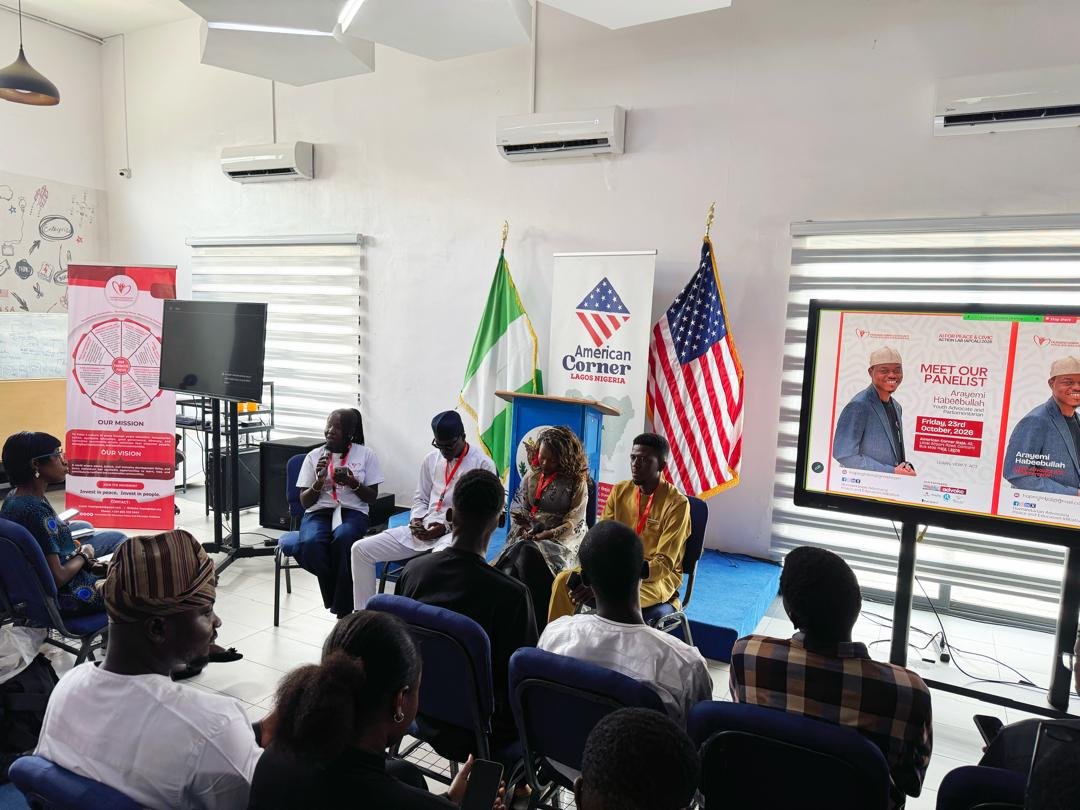
The initiative brings together young people and experts to explore the intersection of artificial intelligence, peacebuilding, information integrity, civic engagement and social innovation.
The Humanitarian Advocacy Peace and Education Initiative (HAPEI) has officially launched the AI for Peace and Civic Action Lab (APCAL) 2026, a youth-focused innovative initiative designed to equip young people with the knowledge, critical thinking and practical skills to responsibly harness Artificial Intelligence (AI) for peacebuilding, civic engagement, information integrity and social impact.
Held at the American Corner in Ikeja, Lagos, the launch convened young people, facilitators and other participants for expert-led learning sessions, panel discussions and collaborative activities examining the opportunities, risks and responsibilities associated with AI.
Anchored on the theme, “Harnessing AI to Advance Peace, Empower Voices and Drive Civic Action for Social Impact,” APCAL reflects HAPEI’s commitment to preparing young people to navigate the evolving digital landscape and apply emerging technologies in ways that support peaceful, inclusive and informed communities.


Exploring Artificial Intelligence, Its Opportunities and Risks
The programme opened with a session titled “Understanding Artificial Intelligence: Opportunities, Risks and the Future,” facilitated by Seun Paul Olatunji. The session introduced participants to AI, its emerging applications and its implications for the future, providing a foundation for understanding the technology and its responsible use.
The session set the stage for deeper discussions on the ethical, social and civic dimensions of AI, highlighting the importance of equipping young people to engage critically with rapidly evolving technologies.
The second session, “Responsible AI: Keeping Machines and LLMs from Absorbing Human Biases,” was facilitated by Damola Oladipo.
The session explored an important question in the development and use of AI: how can systems be designed and used responsibly when the data and information they learn from may contain human biases?
The third session, “Media Literacy in the Age of AI: Information Integrity, Digital Citizenship and Combating Misinformation,” was facilitated by Ruhama Ifere.
As AI increasingly influences how information is created, shared and consumed, media literacy and information verification have become essential skills for navigating the digital environment.
The session focused on the importance of information integrity, responsible digital citizenship and combating misinformation. It reinforced the need for young people to question information, verify claims and make informed decisions before sharing content online.
These skills are particularly relevant to peacebuilding and civic engagement, where misleading information can affect public understanding, deepen divisions and undermine constructive participation.
The fourth session, “AI for Social Innovation and Community Problem-Solving,” was facilitated by Dare Olatunde.
The session explored the potential of AI to support creative thinking, innovation and responses to community challenges. It encouraged participants to consider how AI tools could be applied to identify problems, generate ideas and develop solutions that respond to real needs.
By connecting AI knowledge with practical problem-solving, the session reflected APCAL’s broader objective of moving young people beyond technology consumption towards responsible innovation and meaningful social impact.



Panel Discussion: AI and the Future of Young People
A major highlight of the programme was the panel discussion titled “AI and the Future of Young People: From Digital Consumers to Responsible Innovators and Peacebuilders.”
Moderated by Winner Ogogo, HAPEI’s Executive Director, the discussion featured Amb. Habeebullah Arayemi, Taiwo Joseph and Ojo Semasa.
The panel examined the evolving relationship between young people and artificial intelligence, with a focus on the responsibilities and opportunities that come with increased access to AI technologies.
The discussion aligned with APCAL’s central message: young people should not simply consume digital technologies but should develop the critical thinking, ethical awareness and practical capabilities required to use them responsibly and contribute to positive change.
By bringing together perspectives on AI, youth leadership and peacebuilding, the session created space to reflect on how young people can participate in shaping a more responsible and inclusive technological future.
Collaboration, Brainstorming and Team Presentations
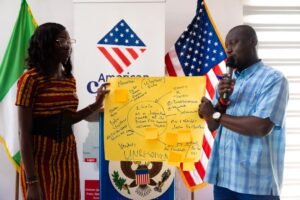
Beyond the expert-led sessions and panel discussion, participants engaged in group brainstorming and team presentations. These activities encouraged collaboration, idea-sharing and creative approaches to applying AI to peacebuilding, civic engagement and community development.
The group activities provided an opportunity for participants to engage with the programme’s themes collectively, consider practical applications and explore the role of responsible technology in addressing social challenges.
The programme was moderated by Gift Mark, who served as the lead moderator throughout the event.
Beyond the Launch: A Continued Learning Journey
The APCAL 2026 launch marks the beginning of a broader learning experience. The programme combines an in-person workshop in Lagos with three weekly virtual learning labs, allowing selected participants to continue learning, collaborate and deepen their understanding beyond the launch event.
The virtual component also creates opportunities for selected participants who are unable to attend the physical gathering to engage in the programme remotely.
Through this model, HAPEI seeks to foster a community of young people equipped to apply responsible AI principles to peacebuilding, information integrity, civic participation and social innovation within their respective communities.
Empowering Young People to Shape the Future of AI
For HAPEI, APCAL represents an important step towards connecting youth empowerment, responsible technology and peacebuilding. As artificial intelligence continues to influence communication, information access and civic participation, young people need opportunities to understand the technology, question its outputs and contribute meaningfully to decisions about its use.
APCAL responds to this need by creating a learning space where young people can explore both the possibilities and limitations of AI while considering how it can be harnessed responsibly for the public good.
The initiative also advances HAPEI’s wider commitment to peace education, youth leadership, digital advocacy, civic engagement and inclusive community development.
As the programme continues through its virtual learning labs, the focus remains on translating knowledge into practical ideas and responsible action.
The future of AI is not only about what technology can achieve, but also about the people who shape it, the choices they make and the impact they create.
Through APCAL, HAPEI is investing in young people as informed digital citizens, responsible innovators and active contributors to peacebuilding and sustainable development.
Learn. Verify. Act.
The AI for Peace and Civic Action Lab (APCAL) is an initiative of the Humanitarian Advocacy Peace and Education Initiative (HAPEI).